Palm Springs luxury homes, neighborhood by neighborhood
The short answer
In Palm Springs, a few things decide the price of a luxury house before you ever see the kitchen. Is the land owned, or leased from an Agua Caliente allottee? Is the house a designated historic site? Does the neighborhood still have room under the city's vacation-rental cap? Two houses on the same block can come out differently on all three. That is why I check those first, and why a Palm Springs price per square foot means little until you know the answers.
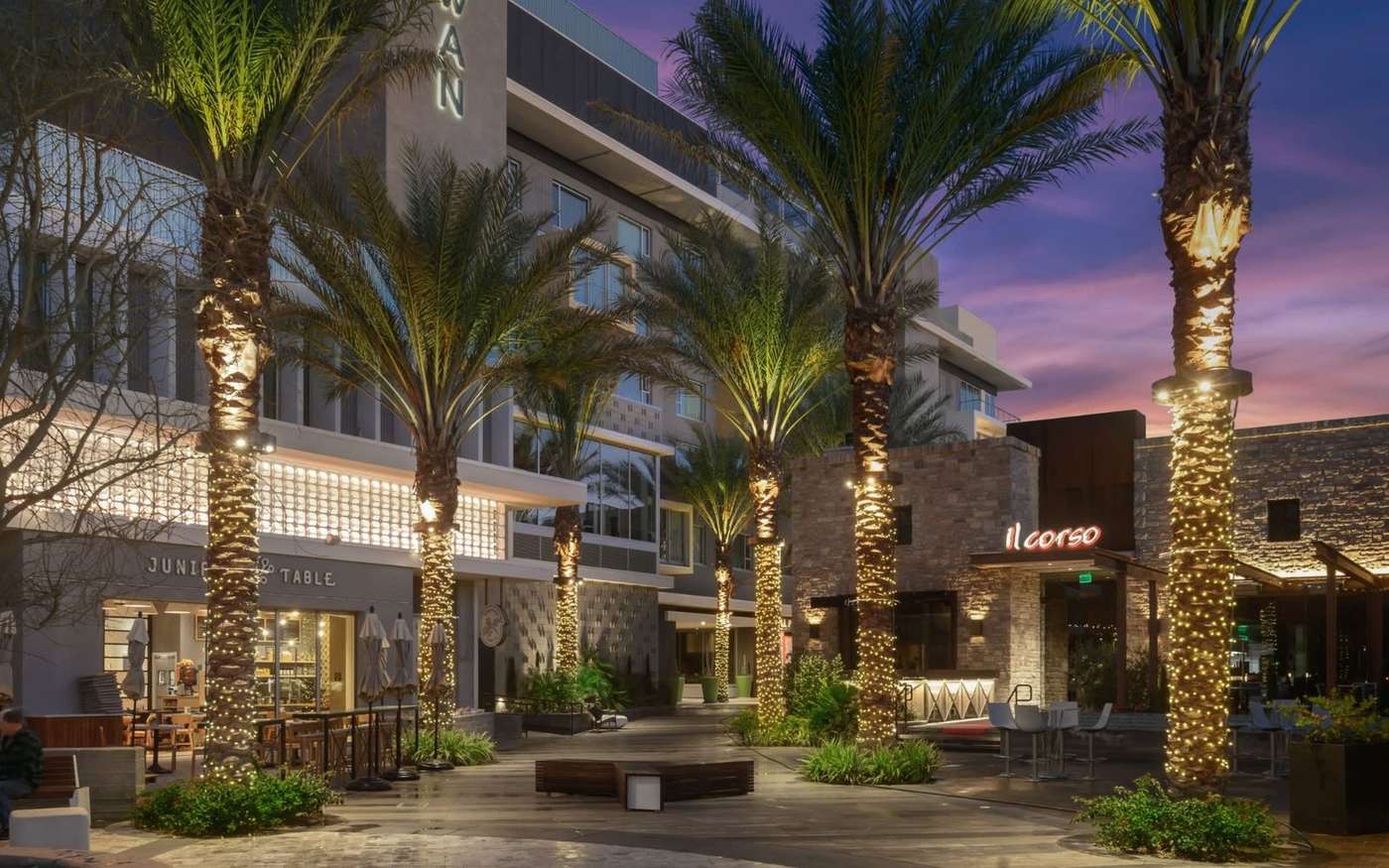
Where luxury trades in Palm Springs
The figures below are single-family sales at $1.5 million and up, closed 10/24/2024 to 10/24/2026 (CDAR/FlexMLS closed sales), as of Oct 24 2026. The MLS records tract names rather than neighborhoods, so I grouped the tracts into the named neighborhoods. Movie Colony here excludes Movie Colony East. Across all 391 Palm Springs sales at that level, the median was $2.01M, $732 a square foot, and 43 days on market.
| Neighborhood | What you are buying | Median sold price (24 mo, SFR $1.5M+) | Median $/sq ft | Median days on market |
|---|---|---|---|---|
| Old Las Palmas | Walled estates under the San Jacintos, west of Palm Canyon | $3.75M (32 sales) | $991 | 36 |
| Vista Las Palmas | Alexander Construction houses, many credited to William Krisel, on the north end below the mountain | $2.55M (29 sales) | $1,073 | 45 |
| Movie Colony | Low walls, big hedges, and Twin Palms, the house E. Stewart Williams designed for Frank Sinatra | $2.65M (11 sales) | $816 | 40 |
| Indian Canyons | Mid-century and later houses around the tribe-owned Indian Canyons golf courses in south Palm Springs | $2.15M (41 sales) | $704 | 46 |
| Smoke Tree Ranch | A gated ranch colony with its own rules and its own pace | 1 sale in 24 months, too few for a median | n/a | n/a |
| Southridge | A gated hillside lane with long views, home to John Lautner's house for Bob Hope | 2 sales in 24 months, too few for a median | n/a | n/a |
Each neighborhood has its own page with more detail: Old Las Palmas, Vista Las Palmas, Movie Colony, Indian Canyons, and Smoke Tree Ranch.
Leased land is the first question I ask
The Agua Caliente reservation was laid out as a checkerboard, and a large share of Palm Springs sits on allotted trust land. Homes on that land are sold on long-term ground leases. The buyer owns the house and leases the dirt. You can't tell by driving the street. One parcel can be fee land and the next one leased.
I don't treat leased land as a defect. I treat it as a price. A lease shows up in three places: the monthly or prepaid lease payment, the remaining term (which lenders and the next buyer will both look at), and the sold price. The mistake I see is a buyer paying fee-simple money for a house whose lease has a short remaining term and no extension on file. The title report and the lease itself tell you what you're buying. The listing headline usually doesn't.
The sold data backs this up. Of 391 Palm Springs single-family sales at $1.5M and up over the last 24 months, 50 (13%) were on leased land. Those leased sales had a median of $670 a square foot, against $748 on fee land. Most of the leased sales were in Indian Canyons: 30 of its 41 sales. There, the leased houses actually sold for more per foot ($728 against $659 for fee), which tells me buyers there price the specific lease and house, not the label. The median leased sale had 37 years left on the lease. (Source: CDAR/FlexMLS closed sales, 10/24/2024 to 10/24/2026. Tenure is read from the MLS land-lease fields.)
For the mechanics (prepaid vs monthly leases, Bureau of Indian Affairs approval, and what a lender asks for), read my Palm Springs leased land by neighborhood guide.
Historic designation and the Mills Act
Palm Springs designates historic resources by class. A Class 1 site can qualify for a Mills Act contract, which trades a minimum ten-year preservation commitment for a property-tax calculation that can come in well below a standard reassessment. The contract runs with the property, so the next owner inherits both the tax treatment and the obligations.
Here's the detail most buyers miss. The city's municipal code defines a Class 1 historic resource as one not located on Tribal Trust or Allotted Trust Land. A significant house on leased land can be important and admired and still fall outside the city's Class 1 and Mills Act framework. If the tax savings are part of why you're paying a premium, confirm the land status and the designation before you write.
Designation also cuts the other way. Class 1 status means exterior changes go through the city's historic review. For a buyer who wants to restore, that's protection. For one who wants to add a second story, it's a wall. I'd rather a client know which they are before they fall for the house.
The vacation-rental cap and what it does to value
Palm Springs caps vacation-rental certificates at 20 percent of the residential units in each recognized neighborhood. Once a neighborhood reaches the cap, the city stops issuing new standard certificates there and returns new applications, with a waitlist that clears first in time, first in right. Existing certificates were not revoked when the cap took effect. Council amended the vacation-rental chapter again on July 8, 2026 (Ordinance 2133), and annual limits on the number of rental contracts still apply.
My view: never pay for rental income you can't get. If a seller's pro forma assumes rental income, don't assume the certificate comes with the house. Confirm with the city's Special Program Compliance office whether you can hold a certificate in that neighborhood before the income goes into your offer. In a capped neighborhood, a house that only works as a rental is worth what it's worth as a home.
Neighborhood rental percentage at time of writing: check the city's live vacation-rental density table on the day you write the offer. It moves.
What the architecture is worth
Palm Springs sells names: Frey, Krisel, Wexler, E. Stewart Williams, Lautner. The name is worth paying for when two things are true. The attribution can be documented through permits, original drawings, or a designation file, not just the listing remarks. And the house still has the bones the architect drew. A Krisel house with its roofline, glass, and plan intact is a different asset from one that kept the address and lost the design.
Over the last 24 months, the 52 Palm Springs sales at $1.5M and up whose listing remarks named a known architect sold at a median of $987 a square foot. The other 339 sold at $723. Twelve listings described the house only as restored or original, and they sold at $915 a square foot. The 141 that described it only as remodeled or renovated sold at $778. These groups come from a keyword search of listing remarks, not verified attributions, and they don't control for neighborhood or size, so read them as a direction, not a price list. (CDAR/FlexMLS closed sales, 10/24/2024 to 10/24/2026.)
Go deeper on the architects: Albert Frey, William Krisel, Donald Wexler, and Twin Palms and E. Stewart Williams. My Palm Springs mid-century neighborhoods guide compares the tracts.
What I'd buy, and what I'd skip
I'd rather own a smaller house with its original design intact, on owned land or a long lease, than a bigger house that was flipped on a short lease. The first holds its buyer pool. The second loses buyers every year the lease runs down.
I'd skip any house where the price only works if a vacation-rental certificate is issued, and any "attributed to" house where nobody can show me a permit.
I'd look hard at the edges of the famous neighborhoods. Streets at the edge of a named neighborhood often have the same mountain and the same era of house, and the label just doesn't follow. The MLS can't measure that gap for you: it records tract names, not which side of a neighborhood line a street falls on. So I price those houses comp by comp, street by street.
FAQ
Is all of Palm Springs on leased land?
No. Palm Springs is a checkerboard of fee land and Agua Caliente allotted trust land, and neighboring parcels can differ. The title report and the MLS land-tenure field show which one a specific house sits on.
Can a house on leased land get Mills Act tax savings in Palm Springs?
Usually not through the city's Class 1 program. The Palm Springs municipal code defines a Class 1 historic resource as one not located on Tribal Trust or Allotted Trust Land, and Class 1 status is what makes a property eligible for a Mills Act contract. Confirm the land status and designation for the specific parcel.
Can I buy a Palm Springs home and rent it as a vacation rental?
Only if the city will issue you a vacation-rental certificate. Palm Springs caps certificates at 20 percent of residential units in each recognized neighborhood, and in neighborhoods at the cap, new applications go to a waitlist. Check the city's density table and confirm before you pay for rental income.
What does Class 1 historic designation mean for an owner?
Exterior changes go through the city's historic review, and the property becomes eligible to apply for a Mills Act contract. It protects the house's design and can lower property taxes, but it limits what you can change.
Which Palm Springs neighborhoods have the most mid-century architecture?
Vista Las Palmas, Twin Palms, and Racquet Club Estates are known for Alexander Construction and Krisel-era houses, and Movie Colony and Old Las Palmas mix mid-century with earlier estates. Whether a specific house's architect claim holds up depends on the permit and design records, not the neighborhood.
Norman Williams, Compass, CalDRE 02051057 · (760) 464-2190 · Ten years in real estate, thirty years living in the Coachella Valley.